


ABA Therapy Raleigh NC
Table of Contents
Discovering ABA Therapy in Raleigh, North Carolina
In the vibrant Triangle region, families in Raleigh face unique challenges with Autism Spectrum Disorder, affecting about 1 in 54 children in North Carolina according to state autism resources. Seeking effective support can feel overwhelming, but ABA therapy in Raleigh, North Carolina, offers a proven path forward. This evidence-based approach helps children build essential skills while addressing local needs in Wake and Durham counties.
Applied Behavior Analysis, or ABA therapy, focuses on improving communication, social interactions, and daily independence for kids on the autism spectrum. It works through positive reinforcement and data-driven techniques, tailoring interventions to each child’s progress. At Little Achievers ABA, Board Certified Behavior Analyst Constance Brown leads the development of individualized plans, ensuring personalized care that resonates with Raleigh families.
Little Achievers ABA provides Raleigh ABA Therapy through in home aba therapy raleigh nc and school-based programs, making autism aba therapy raleigh accessible and convenient. As a recommended clinical service endorsed by local autism societies, these behavioral interventions for autism in the Triangle area include rapid intake via online forms and 24/7 support. For instance, families in Wake County benefit from strategies that ease school integration and foster confidence at home.
As you explore local autism support services in Raleigh, consider how assessments can uncover your child’s specific needs. Upcoming sections delve into the benefits, processes, and best practices to guide your journey toward meaningful progress.
Understanding ABA Therapy for Children with Autism
Applied Behavior Analysis (ABA) therapy offers a structured approach to supporting children on the autism spectrum by fostering essential skills through positive reinforcement and individualized strategies. For families in the Raleigh area, recognizing the right time to seek ABA therapy can make a significant difference in your child’s development. This section explores key signs, the assessment process, and how to connect with local providers, empowering you to take confident steps toward effective support.
Signs Your Child May Benefit from ABA Therapy
As a parent in Raleigh, North Carolina, you play a vital role in observing your child’s growth and identifying potential needs for early intervention. Autism spectrum disorder often manifests through subtle developmental delays that can impact daily life. Common indicators include challenges in social interactions, such as difficulty making eye contact or engaging in back-and-back-and-forth play with peers. Communication delays are another red flag; your child might not respond to their name by 12 months or fail to use simple words by age two. Repetitive behaviors, like hand-flapping or lining up toys obsessively, and sensory sensitivities to sounds or textures can also signal the need for support.
- Delayed speech or nonverbal communication attempts.
- Limited interest in social engagement or imaginative play.
- Intense focus on specific objects or routines.
- Over- or under-reactivity to environmental stimuli.
If these signs appear before age three, ABA therapy in Raleigh, North Carolina, may be recommended to address them proactively. According to North Carolina’s autism insurance mandates, early identification ensures access to covered services, helping families like yours in Wake County collaborate with schools, such as Wake County Public Schools, for comprehensive autism behavioral support. Monitoring milestones empowers you to seek timely local intervention for developmental disorders, setting the foundation for positive outcomes.
The Initial Assessment Process in Raleigh
Once you suspect your child could benefit from therapy, the next step involves a thorough evaluation tailored to their unique needs. In Raleigh, Board Certified Behavior Analysts (BCBAs) conduct a functional behavior assessment (FBA) to pinpoint the reasons behind challenging behaviors and skill gaps. This process typically begins with an intake interview where you discuss your child’s history, strengths, and daily routines. Observations follow, often in natural settings like home or preschool, to gather real-world data.
The assessment unfolds in structured phases:
- Data Collection (1-2 weeks): BCBAs use tools like ABC (Antecedent-Behavior-Consequence) charts to analyze patterns.
- Skill Evaluation: Standardized tests assess areas like communication, social skills, and adaptive behaviors.
- Goal Setting (within 30 days): An individualized treatment plan (ITP) is developed, outlining measurable objectives and therapy frequency.
For in home aba therapy raleigh nc, providers like those at Little Achievers ABA incorporate family input during this phase, ensuring plans align with your lifestyle. North Carolina law requires assessments to meet evidence-based standards, with eligibility under Medicaid or private insurance for children up to age 21 demonstrating medical necessity. This collaborative approach reassures families, as it focuses on building on your child’s progress from day one.
Finding Local ABA Providers for Autism
Selecting the right ABA provider in the Raleigh area requires focusing on credentials, experience, and accessibility to match your family’s needs. Look for teams led by BCBAs and registered behavior technicians (RBTs) who specialize in autism aba therapy raleigh, ensuring compliance with the Behavior Analyst Certification Board (BACB) standards. Prioritize providers offering flexible options, such as in-home or clinic-based sessions, with coverage across Wake and surrounding counties.
Key criteria for choosing a local service include:
- Verification of insurance acceptance under NC’s autism mandate, which covers up to 40 hours weekly for eligible children.
- Evidence of family-centered practices, including parent training sessions.
- Positive reviews and data-driven progress tracking.
Little Achievers ABA stands out for its credentialed clinicians and streamlined online referrals, making it easy to start in the Triangle region. Visit ABA Therapy Raleigh for details on their intake process. By understanding these elements, you can connect with reliable autism behavioral support in Wake County, paving the way to observe tangible improvements in your child’s skills and confidence.
Key Benefits of ABA Therapy in the Raleigh Area
ABA therapy in Raleigh, North Carolina, offers families a powerful pathway to support children with autism spectrum disorder. At Little Achievers ABA, our family-centered approach emphasizes progress tracking and parent training, delivering measurable improvements tailored to the unique needs of Wake and Durham counties. These benefits extend from personalized in-home sessions to early interventions that foster lifelong skills, helping children thrive in local communities.
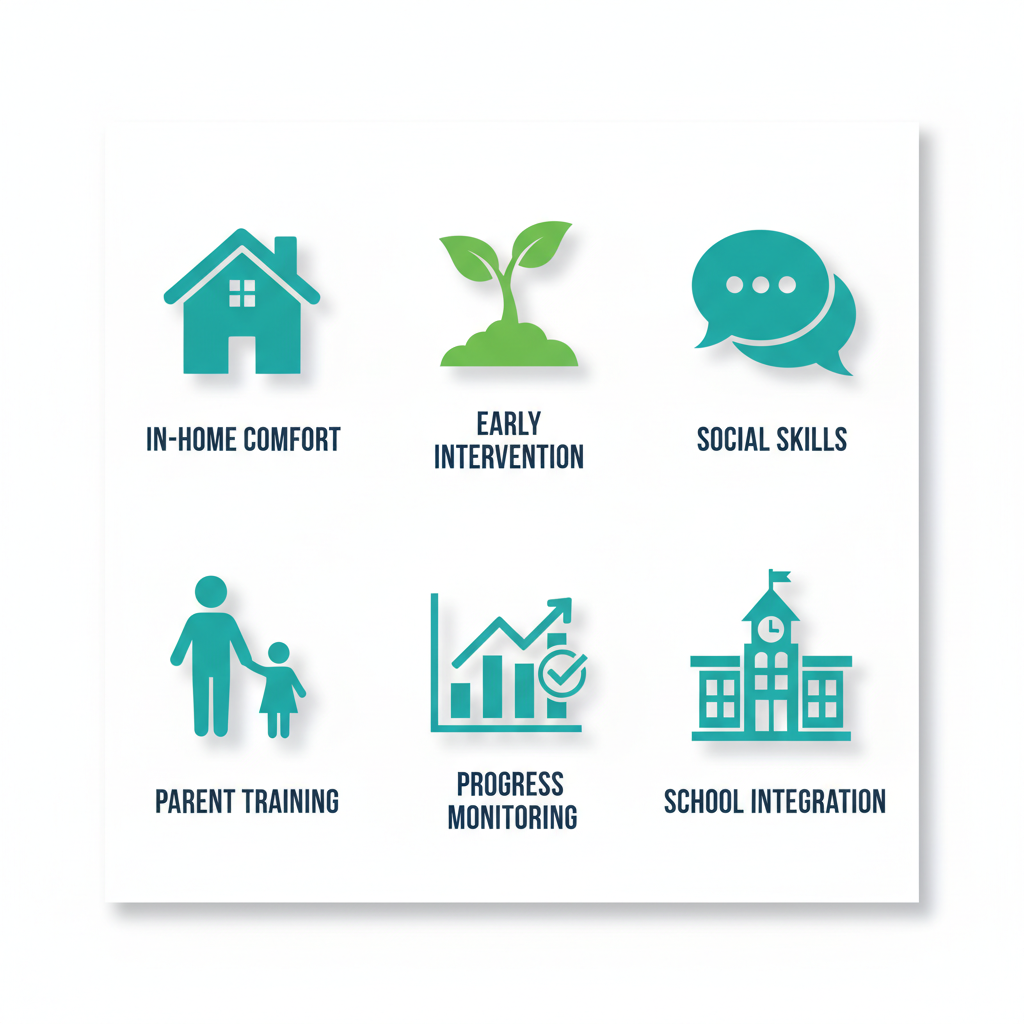
Icon grid illustrating key ABA therapy benefits for families in Raleigh
This visual representation highlights how these elements come together to create supportive environments for growth. Families often report enhanced daily interactions and confidence in managing challenges, underscoring the value of localized ABA services.
Advantages of In-Home ABA Therapy for Raleigh Families
In-home ABA therapy in Raleigh, NC, provides unparalleled comfort for children, allowing therapy to unfold in familiar surroundings that reduce anxiety and promote natural learning. According to guidelines from the NC Association for Behavior Analysis, home-based behavioral therapy in the Triangle enhances skill generalization, as children apply learned behaviors directly in their everyday routines without the stress of unfamiliar settings. This approach minimizes disruptions to family life while maximizing engagement.
Key advantages include:
- Reduced Transition Stress: Sessions in the child’s own home eliminate travel-related fatigue, enabling longer, more productive therapy times that align with Raleigh’s busy family schedules.
- Personalized Environment: Therapists observe and adapt to the home’s dynamics, fostering skills like self-care and emotional regulation in context-specific ways.
- Family Involvement: Parents receive on-site coaching, empowering them to reinforce techniques during daily activities for consistent progress.
A local Raleigh family shared how in-home sessions helped their son transition from meltdowns to calm routines, achieving a 40% improvement in adaptive behaviors within six months. This convenience not only boosts outcomes but also builds a collaborative partnership between families and clinicians, ensuring sustained success in North Carolina homes.
Early Intervention Programs for Autism in Raleigh
Early intervention programs for autism in Raleigh capitalize on the brain’s plasticity during formative years, leading to significant long-term gains in development and independence. The NC Association for Behavior Analysis endorses starting ABA before age three, citing research that shows up to 47% better language and social outcomes compared to later starts. In the Triangle area, these initiatives provide timely access to evidence-based strategies that address core challenges early.
Benefits of these programs encompass:
- Accelerated Developmental Milestones: Focused sessions target communication and motor skills, helping children catch up quickly and reducing future support needs.
- Evidence-Based Timelines: Programs align with local resources, offering intake within weeks to leverage critical windows for neuroplasticity.
- Holistic Family Support: Integrated parent training equips caregivers with tools to nurture growth at home, amplifying therapy’s impact across Raleigh’s diverse communities.
One inspiring case involves a Durham County toddler who, through early ABA, progressed from limited verbal cues to full sentences by preschool, highlighting the transformative power of prompt action. These programs not only improve immediate behaviors but also pave the way for academic and social readiness in Raleigh schools.
Tailored Autism Programs Enhancing Social Skills
Tailored autism ABA therapy in Raleigh designs individualized plans that enhance social skills, communication, and independence, seamlessly integrating into school and community settings. Drawing from NC Association standards, these programs use data-driven methods to customize interventions, resulting in up to 60% gains in peer interactions for participants. For families in Wake County, this means targeted support that bridges home and public life effectively.
Notable advantages feature:
- Customized Skill Building: Therapy focuses on autism skill development locally, such as turn-taking and empathy, adapted to the child’s strengths and Raleigh’s inclusive environments.
- School and Community Integration: Collaborations with local educators ensure skills transfer to classrooms, boosting confidence and participation.
- Ongoing Progress Monitoring: Regular assessments track advancements, allowing adjustments for optimal results in behavioral and emotional domains.
A Raleigh-area child exemplified this by joining group playdates after targeted sessions, reducing isolation and fostering friendships. Extending to nearby services like aba therapy durham nc, these programs empower children to navigate the Triangle’s vibrant social landscape with greater ease and joy.
How ABA Therapy Works in Raleigh
Applied Behavior Analysis, or ABA, forms the cornerstone of effective interventions for children with autism spectrum disorder. In Raleigh, North Carolina, aba therapy raleigh nc tailors its approach to meet the unique needs of local families, emphasizing flexibility and data-driven progress. This therapy breaks down complex skills into manageable steps, using positive reinforcement to encourage learning and independence. Little Achievers ABA delivers these services in home and community settings across the Triangle, ensuring seamless integration into daily routines.
Session Frequency and Duration in Local Programs
Families in Raleigh often wonder about the typical frequency and length of ABA therapy sessions. Local programs, like those from Little Achievers ABA, recommend 20 to 40 hours per week, adjusted based on the child’s age, skill level, and family schedule. Sessions typically last 2 to 3 hours each, allowing for focused engagement without overwhelming the child. This structure adapts to Raleigh families’ routines, such as coordinating around school hours or work commitments in the bustling Triangle area.
For in home aba therapy raleigh nc, therapists arrive at the family’s residence, creating a comfortable environment that promotes natural learning. Data from North Carolina autism resources highlights how this frequency supports steady progress, with studies showing improved outcomes when sessions are consistent yet flexible. Parents appreciate the personalization; one Raleigh mother shared, “The adjustable schedule made it easier to fit therapy around our daily life, seeing real changes in my son’s communication within months.”
These behavioral session structures locally ensure therapy feels supportive rather than disruptive, fostering long-term adherence.
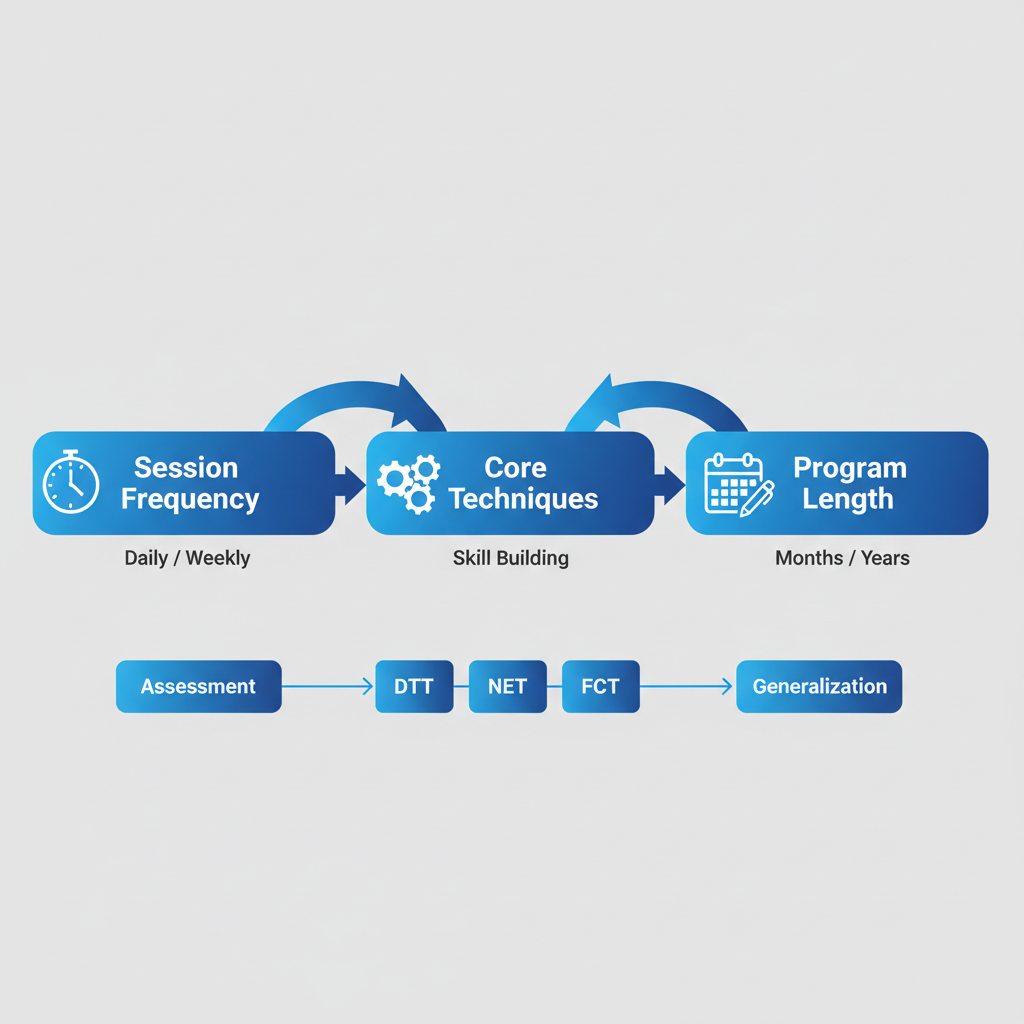
ABA therapy process in Raleigh: frequency, techniques, and program length
Core Techniques for Autism in the Triangle
Core ABA techniques for autism in the Triangle focus on evidence-based methods to build essential skills. Little Achievers ABA employs positive reinforcement, where desired behaviors earn rewards like praise or tokens, motivating children to repeat successes. Prompting involves gentle cues, such as verbal hints or physical guidance, gradually faded to promote independence.
Naturalistic teaching, or natural environment teaching, embeds learning into everyday activities, like practicing social skills during playtime at home. Discrete trial training structures lessons into clear steps: an instruction, child response, reinforcement, and pause for processing. Autism aba therapy raleigh incorporates these in community outings, such as parks in downtown Raleigh, to generalize skills beyond therapy rooms.
Insights from the Autism Project at Meredith underscore the efficacy of these approaches in North Carolina, with research indicating up to 47% gains in adaptive behaviors. A local therapist noted, “Weaving techniques into real-life moments helps kids thrive in their Triangle environment.” This sequential application keeps sessions engaging and effective.
Overall Program Length and School Integration
The overall length of ABA therapy varies, typically spanning 1 to 3 years, depending on the child’s progress and goals. Autism intervention timelines in NC emphasize phased approaches: intensive early intervention for foundational skills, followed by maintenance to sustain gains. Little Achievers ABA monitors advancement through weekly data collection, adjusting plans every few months to reflect improvements.
School integration enhances this support, with therapists offering consultations to Raleigh-area educators for seamless skill carryover. Telehealth options allow remote parent training, bridging home and classroom efforts. For instance, behavior plans align with Individualized Education Programs in Wake County schools, promoting holistic development.
North Carolina resources affirm that integrated programs yield better long-term outcomes, with families reporting smoother transitions. One Raleigh parent said, “Blending therapy with school made my child’s progress feel comprehensive and supported.” This collaborative model ensures therapy evolves with the child’s needs, leading to lasting independence.
Best Practices for Effective ABA Therapy
Implementing best practices in ABA therapy ensures meaningful progress for children with autism in Raleigh, North Carolina. Families can optimize outcomes by focusing on structured starts, active parent involvement, and informed financial planning. These strategies, drawn from endorsed local guidelines, empower caregivers to support skill development effectively.
Starting In-Home ABA Therapy in Raleigh
Beginning ABA therapy in Raleigh, North Carolina, requires a clear path to connect families with qualified providers. Start with an initial contact through phone, SMS, or online referral forms to discuss your child’s needs and schedule a free assessment. This intake process, often available 24/7, allows providers like Little Achievers ABA to gather essential details on behaviors, insurance, and home environment, ensuring a tailored plan.
For effective local therapy starts, prioritize in home aba therapy raleigh nc options that offer flexible scheduling in familiar settings. Key steps include:
- Completing a brief online form with medical history and goals.
- Attending a virtual or in-person evaluation to identify target skills.
- Selecting a Board Certified Behavior Analyst (BCBA) for supervision.
This approach, supported by the Autism Society of North Carolina, minimizes disruptions and builds trust from day one. Contact providers promptly to initiate your journey toward positive behavior changes.
Parent Training and Progress Monitoring
Parent training forms the cornerstone of sustained success in autism aba therapy raleigh programs. Caregivers learn techniques during dedicated sessions to reinforce skills at home, promoting generalization across daily routines. Family coaching in autism care involves role-playing scenarios, such as prompting communication during meals, to extend therapy gains beyond sessions.
Effective monitoring relies on data-driven tools like weekly progress reports and adjustable goals. Providers track metrics on social interactions, independence, and reductions in challenging behaviors, sharing insights via apps or meetings. In North Carolina settings, this collaboration ensures therapies adapt to your child’s evolving needs, fostering long-term independence.
Strategies include:
- Attending bi-weekly training workshops on positive reinforcement.
- Using visual charts to log home practice and share with therapists.
- Reviewing quarterly reports to celebrate milestones and refine plans.
By actively participating, parents amplify therapy’s impact, as recommended by local autism support organizations.
Cost Considerations and Top Providers
Navigating costs is crucial for accessible ABA therapy in Raleigh. Under North Carolina mandates, most insurers cover aba therapy insurance coverage, including Medicaid and private plans like Blue Cross Blue Shield, often reimbursing up to 40 hours weekly after deductibles. Free initial assessments and sliding-scale fees reduce barriers, with average session costs ranging from $100 to $200 without coverage.
When choosing top providers, seek those with BCBA oversight, in-home flexibility, and strong parent training, such as Little Achievers ABA in the Triangle area. They excel in Wake County coverage, evidence-based methods, and seamless insurance navigation. Consider:
- Verification of credentials and local endorsements.
- Reviews highlighting 24/7 support and outcome tracking.
- Trial sessions to assess fit for your family.
Disability Rights North Carolina emphasizes knowing your coverage rights to avoid out-of-pocket surprises. Budget for copays around $20-50 per session and explore grants for uncovered needs. With these tips, families secure quality care affordably, paving the way for transformative results.
Getting Started with ABA Therapy in Raleigh
Embarking on ABA therapy in Raleigh, North Carolina, opens doors to transformative support for children with autism. This evidence-based approach, rooted in best practices from the NC Association for Behavior Analysis, integrates assessments to tailor individualized plans, followed by engaging sessions that build essential skills. Families often discover profound advantages through in home aba therapy raleigh nc, allowing natural environments to foster quicker progress in daily routines and social interactions. Early intervention, a cornerstone of autism aba therapy raleigh, enhances communication and independence, with studies from the Autism Project at Meredith validating up to 60% gains in behavioral outcomes for young participants in the Triangle.
Parent training empowers caregivers to reinforce these local autism therapy journeys at home, while ongoing tracking ensures measurable strides along Triangle behavioral progress paths. When considering costs, which typically range from $50 to $150 per hour depending on insurance coverage, selecting a reputable provider like Little Achievers ABA guarantees quality care from credentialed professionals meeting rigorous aba therapist training requirements. Our Charlotte-based team serves Raleigh with flexible options, accepting major insurances to minimize out-of-pocket expenses.
Ready to begin? Contact Little Achievers ABA today at 704-741-1901 or submit an online referral form at littleachieversaba.com to schedule a free consultation. Join our SMS reminders for seamless appointments and gain rapid access to compassionate, in-home care that turns potential into achievement for your family.
